

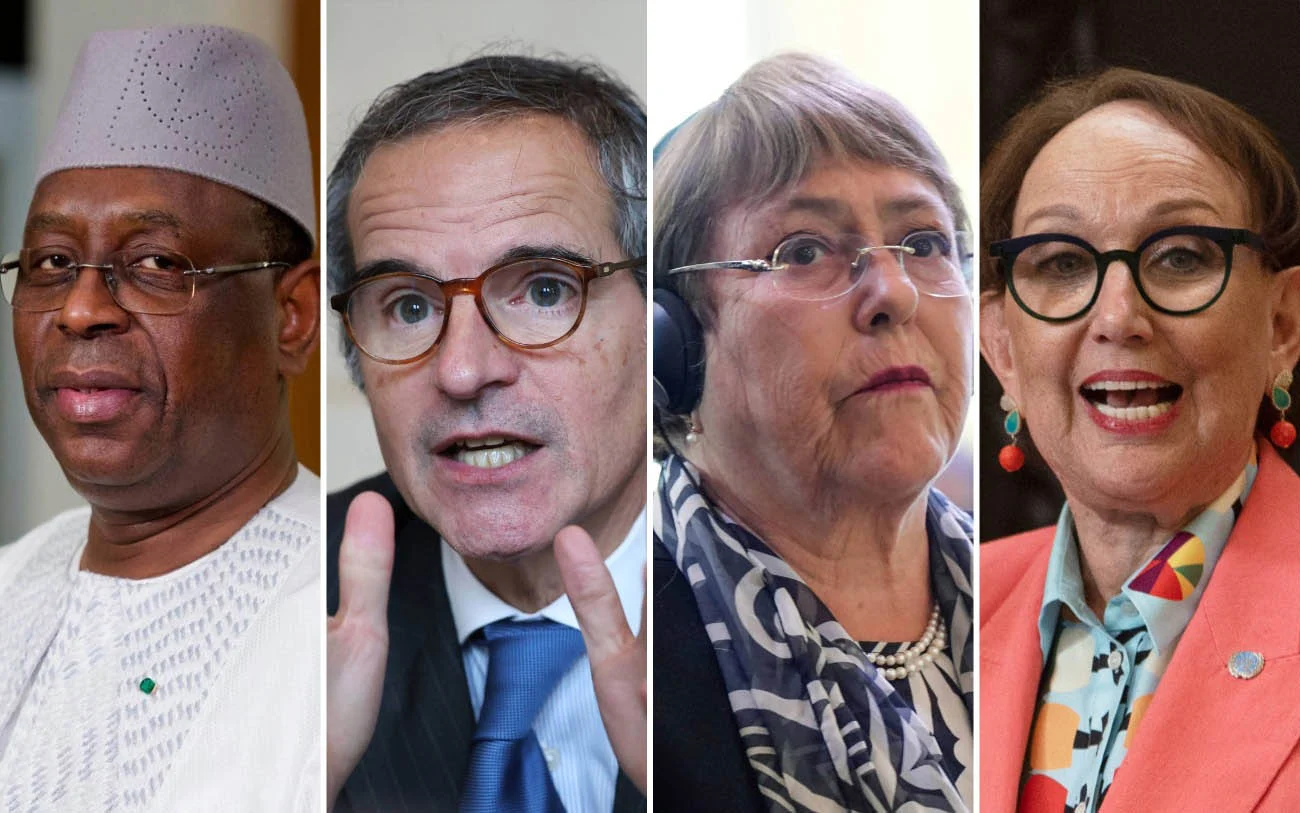
The four declared candidates vying to become the next United Nations secretary-general will face in-person hearings on Tuesday and Wednesday examining their bids to lead the troubled global organization beginning next year.
Among the candidates are Argentina’s Rafael Grossi, who as head of the International Atomic Energy Agency has been at the center of international diplomatic efforts to curb Iran’s nuclear program, and Costa Rica’s Rebeca Grynspan.
Chile’s Michelle Bachelet and Senegal’s Macky Sall are also competing for a five-year term at the helm of the 193-member body, which can be extended for another five.
While they are the only declared candidates so far, others can join in the race in the coming months.
The next UN leader will face an enormous task to revitalize an organization in crisis, whose stature has significantly diminished in recent years.
Major powers, even as they increasingly flout long-held norms of international order, have pressed the UN to reform, slash costs, and prove its relevance.
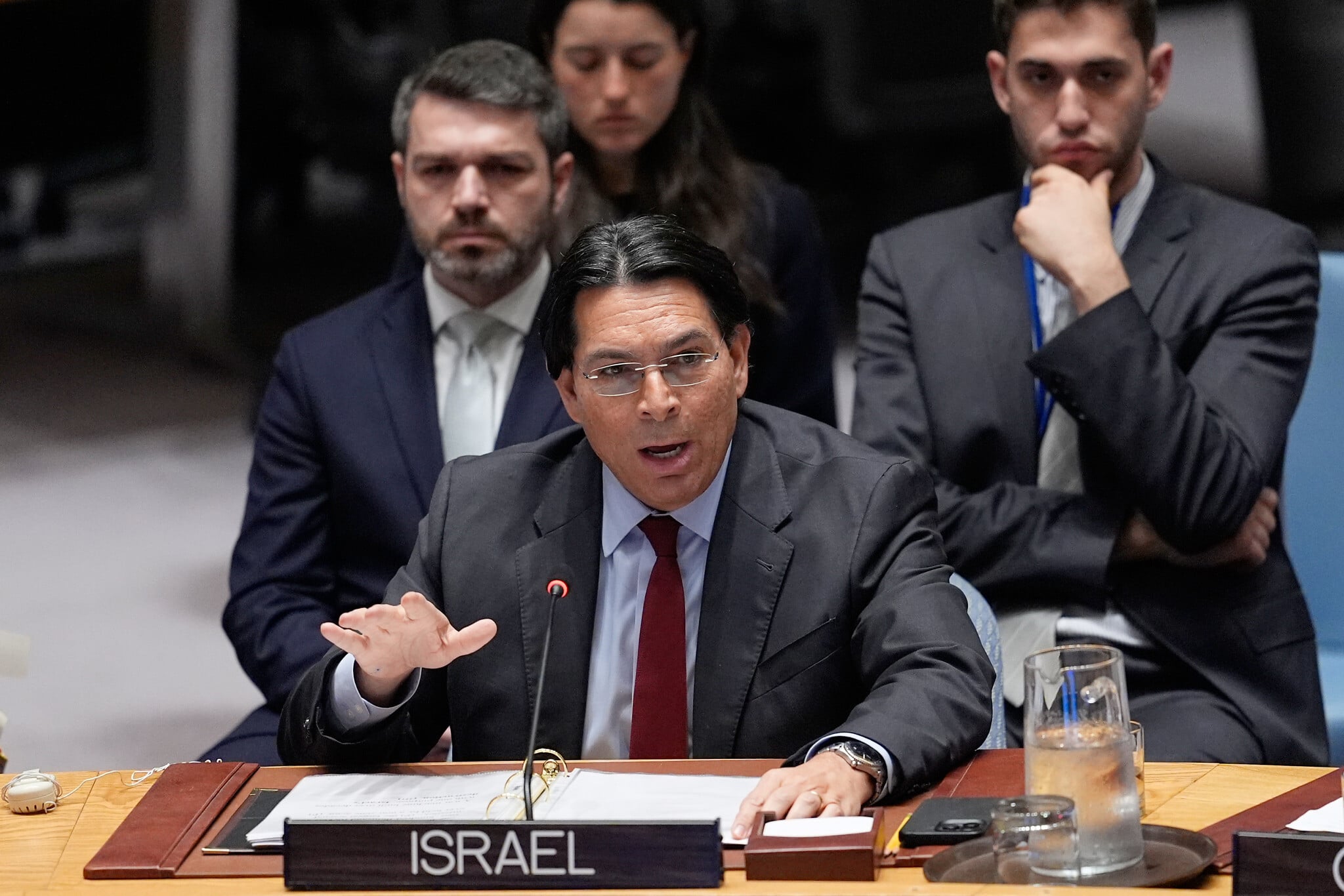
The UN is especially controversial in Israel, which it frequently condemns. The UN General Assembly adopted 15 resolutions last year denouncing the Jewish state, compared to just 11 in total against all others, according to the UN Watch organization.
Israeli leaders often point to the outsize attention, attributing it to antisemitism and rejecting accusations of international law violations and war crimes leveled by various UN agencies.
The outgoing secretary-general, Antonio Guterres, has frequently come into conflict with Jerusalem, especially since the Hamas terror group’s October 7, 2023, attack on Israel sparked war in the Gaza Strip, Lebanon, and elsewhere. The UN and Israel have also butted heads amid the subsequent conflicts in Iran.
In September, a UN panel — which does not speak on behalf of the institution at large — accused Israel of committing genocide in Gaza in a bid to “destroy the Palestinians,” blaming Prime Minister Benjamin Netanyahu and other top officials.
Israel vehemently rejects allegations that it has committed genocide amid the ongoing offensive in Gaza.
Israel has said that in all its operations, it seeks to minimize civilian fatalities, and has stressed that in its war against Hamas, the terror group used Gaza’s civilians as human shields, fighting from civilian areas including homes, hospitals, schools, and mosques.
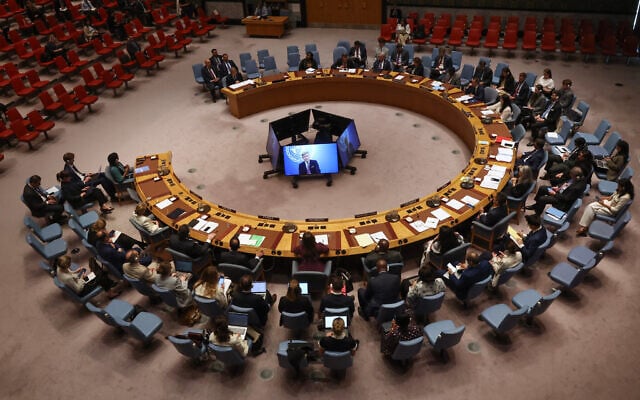
On Tuesday, Bachelet and Grossi will be first up for three hours of grilling at UN headquarters in New York, from member states and civil society representatives. The hearings for Grynspan and Sall are set to be held on Wednesday.
There are currently far fewer candidates for the role than in 2016, when the Portuguese Guterres was chosen from a field of 13 contenders, seven of them women.
No woman has been chosen in the UN’s 80-year history, despite growing calls to end this anomaly, and tradition has dictated that the role rotate between regions, with Latin America next in line.
Another unwritten rule is that a secretary-general never come from among the five permanent members of the UN Security Council — Britain, China, France, Russia and the United States — to avoid over-concentration of power, though their backing is crucial in a lengthy and arcane selection process.
“The need for a Secretary-General prepared to defend a clear, proactive vision for the UN on peacemaking and crisis management could not be more urgent,” the International Crisis Group’s Daniel Forti wrote recently. “If candidates and member states miss this opportunity, there may be little left of the UN to defend.”
Here are the candidates so far running:
Rafael Grossi
Rafael Grossi, a 65-year-old career diplomat from Argentina, has been an omnipresent, hyperactive director general of the UN nuclear watchdog for the past six years.
While the International Atomic Energy Agency has long policed Iran’s nuclear program, Grossi led negotiations aimed at salvaging parts of a landmark nuclear deal between Tehran and major powers after US President Donald Trump’s decision to pull the United States out of it in 2018.
Grossi’s critics argue he has gone too far in trying to cut deals with Iran. The Islamic Republic, which frequently vows to destroy Israel, claims it does not seek a nuclear weapon, but it has enriched uranium to levels far beyond what’s necessary for civilian applications and has obstructed inspections of its facilities.
A father of eight and polyglot who speaks English, Spanish, French and Italian, Grossi has raised both his and the IAEA’s profile with his shuttle diplomacy in international crises.
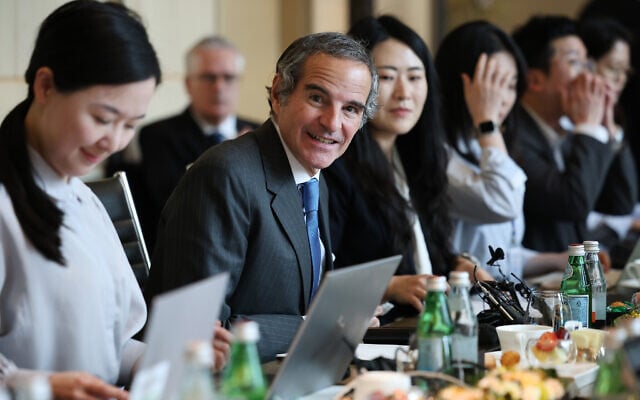
His clearest success was getting a small IAEA team stationed at the Russian-occupied Zaporizhzhia nuclear power plant in Ukraine after repeated trips across the front line in the Russia-Ukraine war.
He has sought to project the image of a man of action in the race, in which many diplomats see him as front‑runner after his years spent trying to keep onside the five permanent members of the UN Security Council, whose backing is crucial for the top job.
“These experiences have confirmed a conviction I hold deeply: Even in times of division, multilateral institutions can deliver real, positive impact,” Grossi’s vision statement for the post states.
Rebeca Grynspan
Rebeca Grynspan, 70, depicts herself as a reform‑minded multilateralist who has battled gender barriers and has had a lifelong belief in the UN and its commitment to peace, development and human rights.
A former vice president of Costa Rica who heads the UN Conference on Trade and Development, Grynspan said she stepped back from duties until September to avoid conflicts of interest during the campaign. Grossi has continued in his role at the IAEA while campaigning.
Born to Jewish parents who immigrated to Costa Rica from Poland in the wake of the Holocaust, she links her worldview directly to the origins of the UN and its role in international cooperation and preventing conflict.
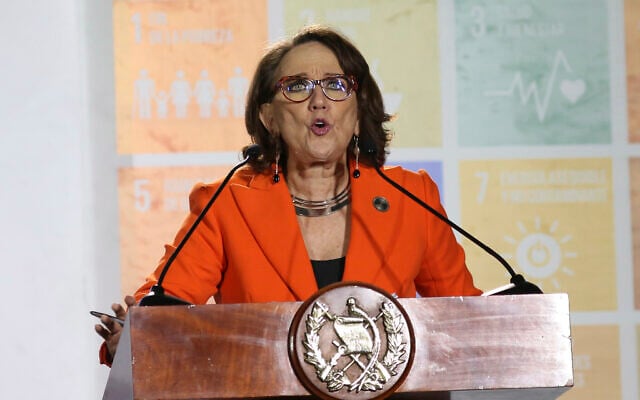
Grynspan, who would be the first woman in the role, has said that while she had to make trade‑offs between family life and public service at UNCTAD, being the first woman in charge there shaped her leadership.
“I am not waiting for special treatment. I want equal treatment,” she told Reuters.
An economist, Grynspan describes herself as a “mature leader” who would lead a more agile UN through collaboration with other players while defending its core values.
Michelle Bachelet
Michelle Bachelet, 74, is a two-time president of Chile and a former UN High Commissioner for Human Rights, who also served from 2010-13 as executive director of UN Women, an agency promoting women’s rights.
In her human rights role, Bachelet was a harsh critic of Israel. As she left office in 2022, she accused Jerusalem of trying to “block human rights access” when it didn’t give her staff visas.
Israel’s mission in Geneva said in response that “the prevalence of bias against Israel in her office is well known, and her office’s reports on Israel are unbalanced and prejudiced.”
Last month, Chile withdrew its backing for Bachelet after a right-wing shift in the country’s leadership, but she said she would press ahead with support from Brazil and Mexico.
Chilean President Jose Antonio Kast’s government said her campaign lacked broad political consensus at home and faced poor odds internationally.
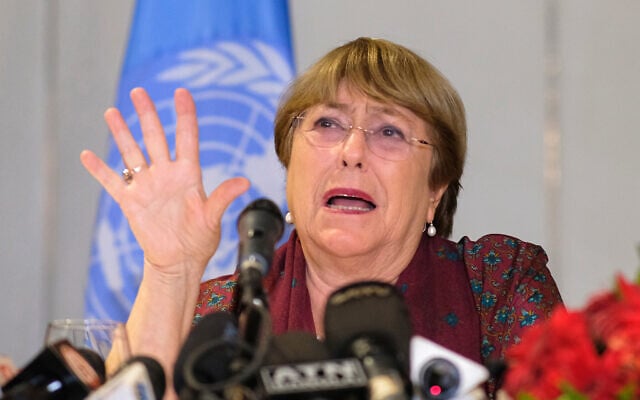
Bachelet has faced criticism from US conservatives for her pro-choice stance on abortion and in April Washington’s UN envoy, Mike Waltz, appeared to torpedo her bid by saying he shared a US senator’s concerns about her suitability.
Republican Senator Pete Ricketts charged that Bachelet had pulled punches as UN human rights chief in a 2022 report by failing to label China’s actions against Uyghur Muslims a genocide, and has also promoted abortion as a fundamental human right. Beijing has not stated its position on her candidacy.
Macky Sall
Macky Sall, who was Senegal’s president for 12 years until 2024, emphasizes his experience as head of state as a key asset for the role of secretary-general.
The 64-year-old geologist — the son of a peanut seller from a poor part of the West African country – completed major infrastructure projects during his tenure and has championed African development.
Sall has stressed the need to support developing countries burdened by debt. He is calling for an overhaul of the Security Council, in a nod to demands from developing nations for permanent seats on the most powerful UN body.
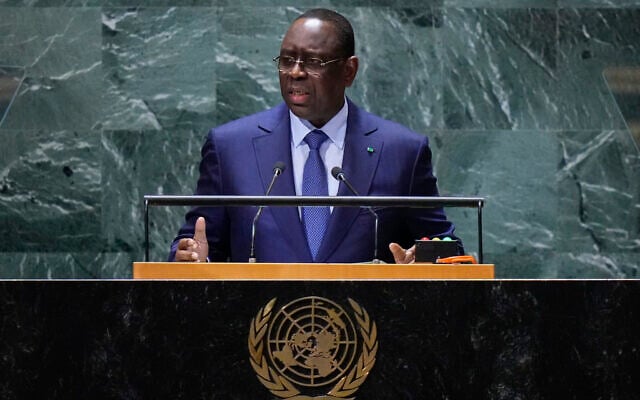
“More than ever, a reinvented multilateralism remains the best way to respond to the challenges of a world in full transformation,” he said on X.
Sall, who is soft-spoken and more comfortable in French than English, was nominated by Burundi. His candidacy has mixed backing in Africa, with his homeland and Nigeria withholding support, according to diplomatic notes reviewed by Reuters.
If chosen, he would be the third African secretary-general after Egypt’s Boutros Boutros-Ghali and Ghana’s Kofi Annan.

