

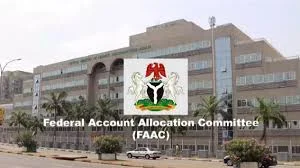
The Federal Government has dismissed reports alleging diversion of federation revenue, insisting that deductions by the Federation Account Allocation Committee (FAAC) have been wrongly portrayed in recent media interpretations of the World Bank’s Nigeria Development Update (NDU).
In a statement issued on Sunday by the Ministry of Finance and signed by Minister of State for Finance, Taiwo Oyedele, the government said the claims circulating in parts of the media misrepresented standard fiscal processes and the findings of the World Bank report.
The ministry explained that what has been described in some reports as “diversion” or “hidden spending” is in fact made up of statutory transfers, savings and investments, security-related expenditures, cost-of-collection charges, refunds to Ministries, Departments and Agencies (MDAs), and other legitimate financial obligations.
“The attention of the Federal Ministry of Finance has been drawn to recent media reports and commentaries that misrepresent the findings of the latest Nigeria Development Update by the World Bank, particularly claims suggesting that a significant portion of federation earnings is being diverted or constitutes hidden spending,” the statement read.
Read Also:
“These interpretations misrepresent the World Bank’s analysis and reflect a misunderstanding of the fiscal system.”
The ministry further clarified that FAAC deductions are not revenue leakages, stressing that they include lawful fiscal transfers and repayments to federal and state entities.
It added that refunds and transfers to subnational governments represent constitutionally backed financial obligations and cannot be classified as missing funds.
The government also questioned media narratives that focused on alleged fiscal weaknesses, noting that the World Bank’s report highlighted ongoing reforms expected to strengthen transparency and improve revenue performance.
According to the ministry, the World Bank acknowledged recent policy measures, including reforms introduced in early 2026 and an Executive Order aimed at improving petroleum revenue remittances, which are projected to increase distributable revenue to all tiers of government.
The ministry stated that the report also pointed to broader economic improvements, including stronger external reserves, a current account surplus, declining debt-to-GDP ratio, and easing inflation pressures, attributing these trends to ongoing macroeconomic reforms.
“It is incorrect to suggest that Nigeria’s fiscal system is collapsing. The World Bank clearly noted that reforms are working and should be sustained to achieve inclusive growth,” the ministry said.
Reaffirming government position, the Ministry of Finance said it remains committed to strengthening fiscal transparency, improving revenue mobilisation, and ensuring efficient public spending across all levels of government.
It urged the media, stakeholders, and the public to adopt accurate and responsible interpretation of fiscal data to avoid misrepresentation that could undermine economic reforms.
Meanwhile, the World Bank recently removed the Nigeria Development Update report from its website days after publication, a development that has further attracted public attention.
🚨 BREAKING: Watch the full clip here ➤

