

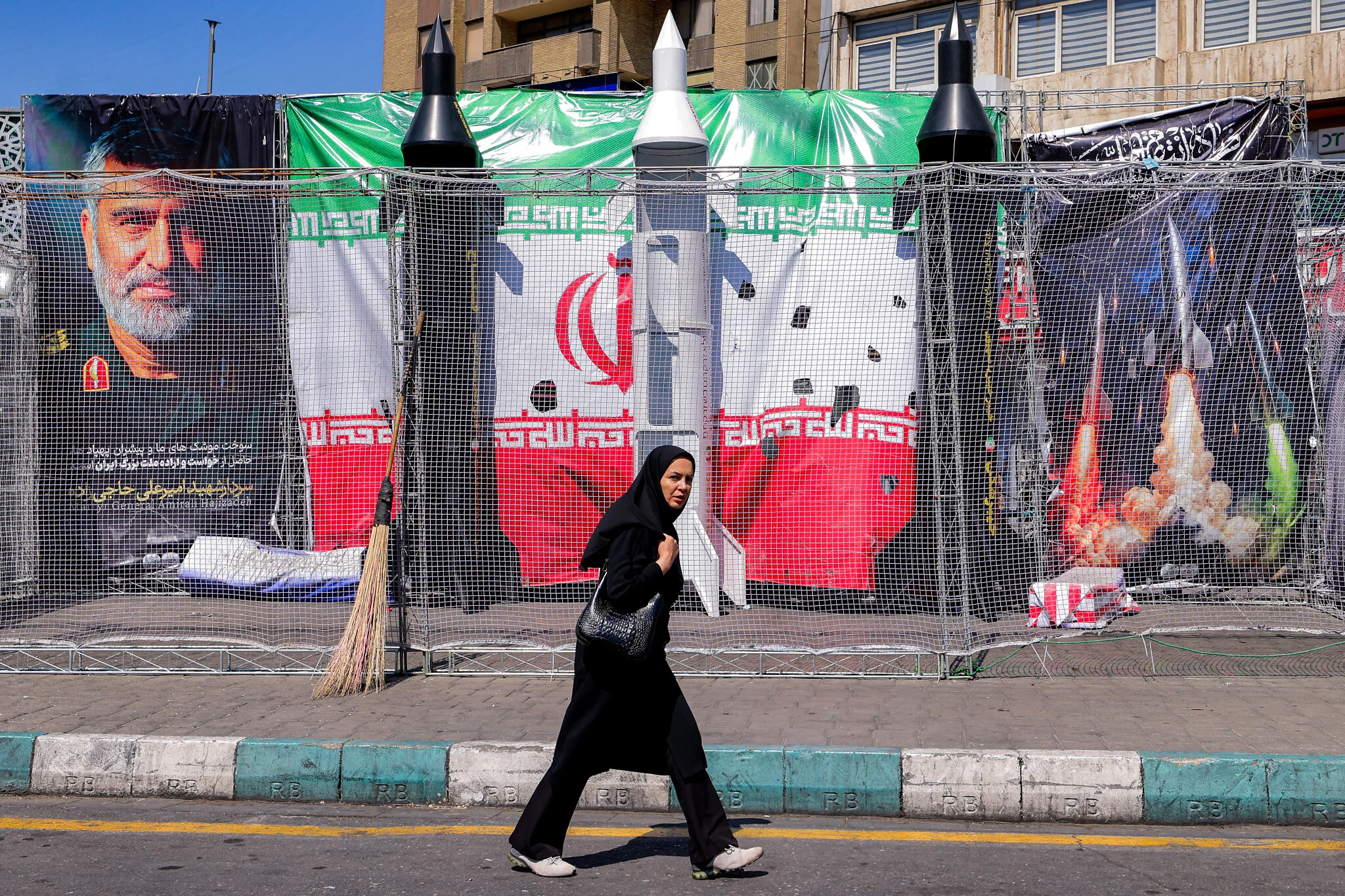
For six weeks, the United States and Israel pummeled Iran’s military infrastructure — with US Central Command saying it had struck over 13,000 targets, and Israel reporting some 4,000 of its own. Yet even in the final days before a two-week ceasefire was announced, ballistic missiles continued to be launched at Israel and other states in the region.
While Tehran’s rate of launches dropped sharply as the war progressed — from roughly 80 missiles fired at Israel on the first day to around 10-20 per day over the following weeks — the sustained attacks have raised questions about the extent of the damage inflicted in both the most recent war and an initial round of fighting in June.
US Defense Secretary Pete Hegseth recently told reporters that the US-Israel bombing campaign had “functionally destroyed” Iran’s missile program and rendered its military “combat ineffective for years to come.”
Yet the IDF says over the roughly six weeks of fighting, it managed to set back Iran’s missile project only partially, owing in part to the hardened nature of underground facilities, while slowing, but not significantly halting, the buildup of the Islamic Republic’s stockpile.
With ceasefire talks between the US and Iran set to resume Tuesday, Israel is concerned that the ballistic missile issue is not being included in the talks and that the sides may come to an agreement that allows Iran to continue building up its missile program, Army Radio reported Monday, citing a senior Israeli source.
Speaking to Reuters Monday, a senior Iranian source said Tehran’s “defensive capabilities,” including its missile program, were not open to negotiation with the United States.
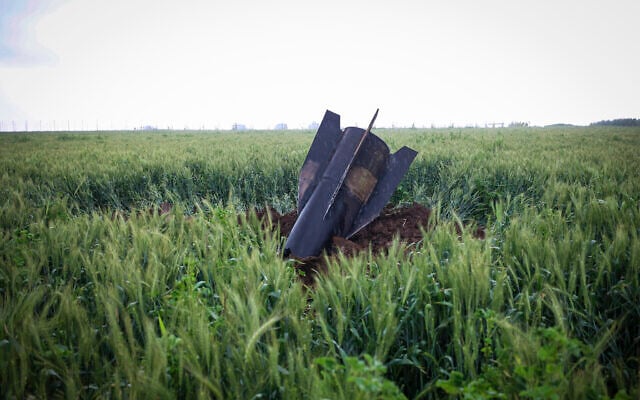
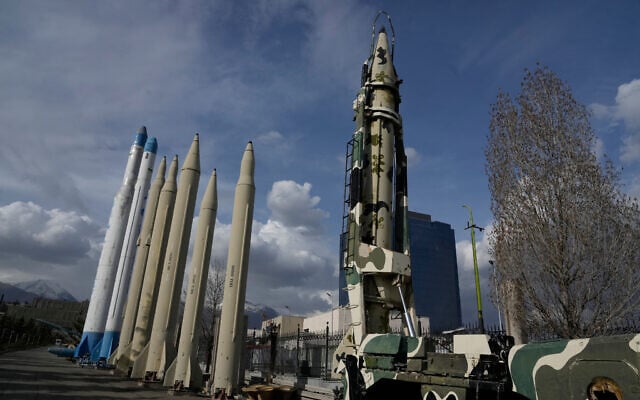
While Israel believes it caused significant damage to Iran’s weapons program, recent estimates by IDF intelligence officers indicated that Iran still possesses around 1,000 ballistic missiles, down from roughly 2,500 at the outset of the war, and will soon recover the ability to start building up its stockpile again.
According to figures released by the Israel Defense Forces, the military also destroyed or disabled around 60% of Iran’s estimated 470 ballistic missile launchers. Around 200 of the launchers were destroyed in strikes, while another 80 were considered to be non-operational after the IAF struck tunnel entrances to subterranean facilities where they are stored.
Similar assessments emerged after the 12-day war in June 2025, when Israeli officials said roughly half of Tehran’s 3,000 ballistic missiles and 80 percent of its 500 launchers had been destroyed, according to a Washington Post report — figures that underscore both the scale of the damage inflicted by Israel and Iran’s apparent ability to replenish its capabilities, as evidenced by its continued missile fire in the latest conflict.
Israel launched the war against Iran on February 28, alongside the US, with the stated goal of destroying Iran’s ballistic missile capabilities, as well as its nuclear enrichment capabilities, while creating the opportunity for regime change.
The IDF has said that the most significant blow during the war was to Iran’s arms production industry, with the military reporting that it struck all of the key sites used to develop weapons that threaten Israel. Israel has said that these strikes have caused significant damage to Iran’s ballistic missile production industry, and as a result, it currently cannot manufacture any new missiles.
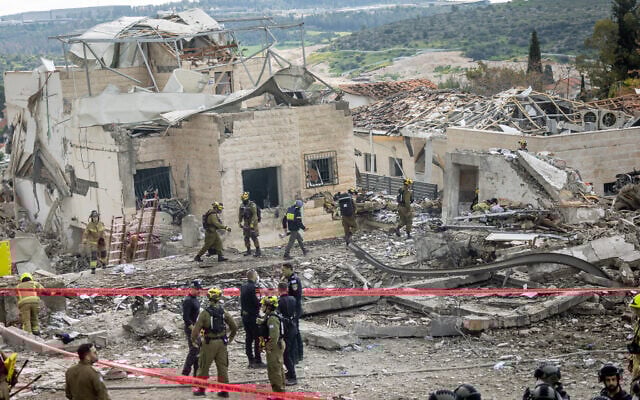
However, in a briefing for reporters on Friday, senior military officials said that they assess that Iran will quickly work to return some manufacturing capabilities.
According to the Military Intelligence Directorate’s assessments, had Israel and the US not launched the war against Iran, Iran would have built a stockpile of some 8,000 ballistic missiles within a year and a half. Such a quantity of missiles would challenge Israel’s air defenses and would be able to cause massive and widespread damage in Israel.
Instead, Iran is now believed to be on a timeline that will only allow it to produce several thousand missiles over the next few years, depending on how much it invests in the program and its access to raw materials, some of which must be imported.
Temporary plugs
Speaking to The Times of Israel, former IDF spokesperson and former chief of the military’s air defense array Ran Kochav said many of Iran’s missile launchers and munition storage facilities are located in underground bases, making them difficult to destroy outright.
In these cases, Kochav explained that the air force uses a “plugging” method, targeting the entrances to underground facilities in an effort to trap the weapons systems inside.
Yet the effect of such attacks can be shortlived, according to Jonathan Ruhe, a fellow for American strategy at the Jewish Institute for National Security of America.
“Striking the entrances to underground facilities is a good way to completely, yet only temporarily, block operations at these sites,” said Ruhe, who noted that Iran is already recovering from the damage.
A March 20 CNN investigation into the Islamic Revolutionary Guard Corps’ underground bases, many of them embedded deep within Iran’s mountainous terrain, offered some insight into the program’s resilience. Using satellite imagery, the report found that US and Israeli strikes have largely focused on entry and exit points to these facilities.
Out of the 27 tunnel openings reviewed by the news outlet, 77% were found to have been struck. But in several cases, satellite imagery showed Iran beginning to clear the sites within 48 hours.
A subsequent New York Times report, citing US intelligence, appeared to reinforce that assessment, saying that Iranian personnel have been digging out bombed underground missile bunkers and silos from the rubble, returning them to service within hours after being struck.
Even after the ceasefire took hold on April 8, those recovery efforts appeared to continue.
“I saw various reports… that the Iranians had managed to reopen the tunnel doors relatively quickly,” Kochav said.
Satellite imagery published by digital map platform SoarAtlas on Wednesday showed dump trucks engaged in “active debris removal” at tunnel entrances to missile bases in Tabriz and Khomeyn that were hit in US-Israeli strikes.
Satellite imagery from Airbus on Apr 10 shows equipment removing debris at a blocked tunnel entrance at a missile base south of Tabriz, Iran.
Georeferenced for before‑and‑after comparison here: https://t.co/fLZu9enJIN#IranWar #MiddleEast #Iran pic.twitter.com/L4bHxOJJI5
— Soar (@SoarAtlas) April 15, 2026
US officials assess that Iran retains thousands of missiles and are concerned Iran will work to rebuild its ballistic capabilities during the break in the fighting with the US and Israel, the Wall Street Journal recently reported.
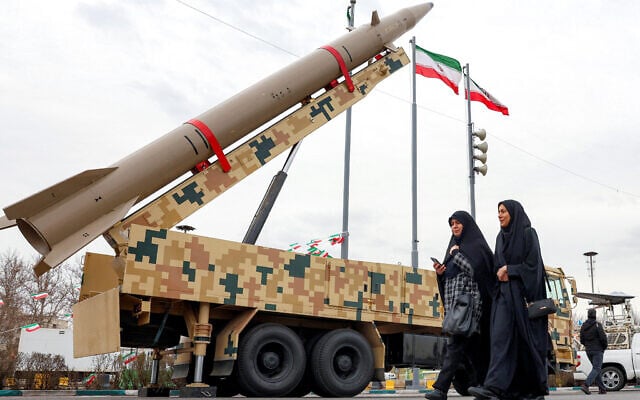
Ballistic missiles cannot be fired without launch platforms, with Iran typically using mobile transporter-erector-launchers, called TELs, providing them the flexibility to fire from anywhere in the country. Such launchers are designed to be reusable, meaning their loss can significantly limit Iran’s ability to sling projectiles at Israel or others, even if it retains a sizable missile stockpile.
Like ballistic missiles, the replacement of destroyed launchers is considered to be relatively quick and inexpensive. Iran’s TELs are often based on modified commercial trucks and carriers, allowing them to be produced at lower cost and dispersed among civilian infrastructure.
Beyond the tunnel networks housing Iran’s missile program, far more deeply buried facilities present an even greater challenge.
Other underground installations — including those tied to Iran’s nuclear program and so-called “missile cities,” which serve primarily as command-and-control hubs for Islamic Revolutionary Guard Corps personnel and equipment — are carved into the Zagros and Alborz mountain ranges far below standard missile facilities, making them even more difficult to target.
Kochav explained that during the fighting, the IDF only handled such facilities located at what he described as a “reasonable depth.”
Deeper targets require advanced GBU-57 Massive Ordnance Penetrator bombs, commonly known as “bunker busters,” which only the US is known to possess, meaning the Americans were tasked with handling those sites.
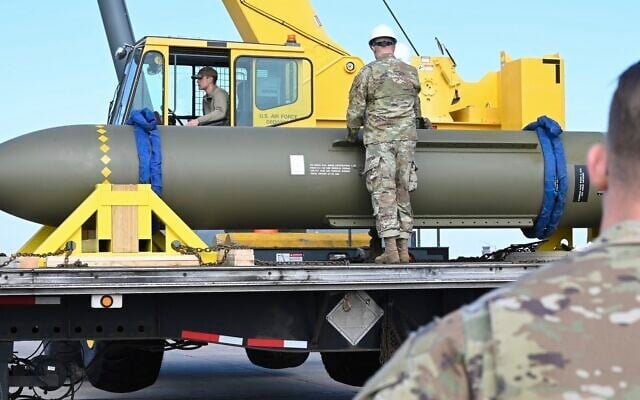
But some facilities are believed to be buried as much as 500 meters (1,640 feet) beneath solid granite, well beyond the reach of bunker busters, which can penetrate roughly 60 meters (200 feet) into the ground and significantly less into dense materials such as granite.
Compounding the challenge is a factor often overlooked: weather.
Iran’s rainy season, which typically runs from November through April, brings heavy cloud cover, rain, snow and fog that degrade visibility. These conditions can complicate efforts by US and Israeli forces to identify and strike targets, while potentially giving Iran greater cover to launch missiles.
According to Kochav, operating during the rainy season is “less favorable” than in the summer months — particularly this year, as March saw especially heavy rain across Iran — a factor that contributed to the decision to initially plan the operation for June, before it was accelerated to late February following mass anti-regime protests in the Islamic Republic.
“Iran is a very high-altitude country — there is snow in Iran. It’s not Israel,” he said. “The best way to collect intelligence is through satellites and electro-optical systems, which are affected by fog, clouds and rain.”
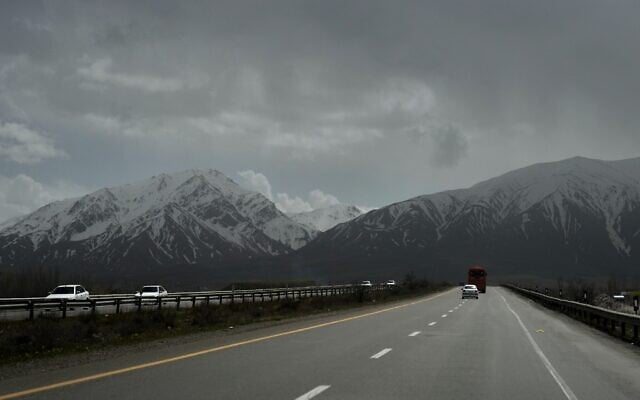
Ruhe noted that another challenge in striking missile sites stems from Iran’s size and terrain.
“Iran is a large and mountainous country, with lots of missiles that can be fired from lots of places,” he said, adding that the US-Israel campaign largely focused on targets in western and southern Iran. “Many Iranian missiles can still reach the Gulf from deeper inside the country, where Israel and the United States didn’t operate as extensively.”
With Iran’s missile program down but not out, it remains a distinct possibility that the latest engagement was not the last and that Israel, and perhaps the US, will need to reprise the military campaign to pare back Iran’s capabilities.
And there’s no guarantee a future operation would see any more success, given Iran’s demonstrated ability to adapt under pressure, refining its tactics in real time to blunt Israeli and US efforts.
“Iran adapts during war to complicate US-Israeli targeting,” Ruhe said. “For instance, it dispersed its launchers and switched up its firing tactics during the 12-day war in response to Israel’s successes in targeting launchers.”

